
The AI reading companion for people who take books seriously
AI insights, chapter breakdowns, community discussions — all in one place.
Callista : a Tale of the Third Century
About this book
More by John Henry Newman
Browse all books by this authorExplore Historical fiction Books
Discover more Historical fiction literature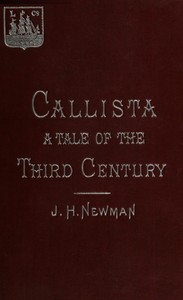
Click "Read now" to open in our Reader with AI features.
Community Discussions
Join the conversation about this book
Discussions
0 discussions
No discussions yet
Be the first to start a discussion about this book!
Sign up to start the discussionAI-Powered Insights
A clearer way to understand Callista : a Tale of the Third Century through themes, characters, and key ideas
This reading guide highlights what stands out in Callista : a Tale of the Third Century through 4 core themes, 4 character profiles, and 10 chapter-level ideas. It is meant to help readers decide whether the book fits their taste and deepen the reading once they begin.
About this book
A quick AI guide to “Callista : a Tale of the Third Century”
Get the shape of the book before you commit: what it is about, what mood it carries, and what ideas readers tend to stay with afterward.
What the book is doing
John Henry Newman's "Callista: A Tale of the Third Century" is a historical novel set in Roman North Africa during the Decian persecutions. It intricately explores the spiritual journey of Callista, a talented pagan sculptor, as she grapples with the emptiness of paganism and the profound truth of Christianity. Through her interactions with a conflicted young Christian named Agellius and various other characters, Newman illuminates the clash between the decadent Roman world and the burgeoning, persecuted Christian faith. The narrative culminates in Callista's conversion and eventual martyrdom, serving as an apologetic work that showcases the logical and emotional draw of early Christianity amidst a hostile empire.
Key Themes
Faith vs. Paganism/Atheism
The central theme of the novel, exploring the fundamental differences between the polytheistic, often superstitious, and morally ambiguous world of paganism, and the monotheistic, ethically demanding, and spiritually fulfilling nature of Christianity. Newman argues for the intellectual and moral superiority of Christianity.
Martyrdom and Suffering
The novel portrays martyrdom not as a tragic end, but as the ultimate act of faith, a testament to divine truth, and a means of spiritual purification and triumph. It highlights the courage of early Christians in the face of persecution and the transformative power of suffering for one's beliefs.
“"The heart is a sanctuary, which the world may not profane, but which it may tempt." (Paraphrased, reflecting Newman's focus on inner life and temptation)”
How does Newman portray the spiritual emptiness of paganism compared to the fullness of Christian faith?
See chapter-by-chapter takeaways, deeper character arcs, and a fuller literary analysis built around this book.
Unlock full AI analysis for “Callista : a Tale of the Third Century”
Chapter breakdowns, character deep-dives, and thematic analysis — all in one place.
Reader Reviews
See what others are saying
Reviews
Overall Rating
Based on community ratings
No reviews yet
Be the first to review this book!
Readers Also Enjoyed
Discover more books similar to Callista : a Tale of the Third Century