
The AI reading companion for people who take books seriously
AI insights, chapter breakdowns, community discussions — all in one place.
Medical Inquiries and Observations, Vol. 4: The Second Edition, Revised and Enlarged by the Author
About this book
More by Benjamin Rush
Browse all books by this authorExplore Medicine Books
Discover more Medicine literature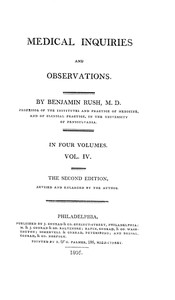
Click "Read now" to open in our Reader with AI features.
Community Discussions
Join the conversation about this book
Discussions
0 discussions
No discussions yet
Be the first to start a discussion about this book!
Sign up to start the discussionAI-Powered Insights
A clearer way to understand Medical Inquiries and Observations, Vol. 4: The Second Edition, Revised and Enlarged by the Author through themes, characters, and key ideas
This reading guide highlights what stands out in Medical Inquiries and Observations, Vol. 4: The Second Edition, Revised and Enlarged by the Author through 5 core themes, 2 character profiles. It is meant to help readers decide whether the book fits their taste and deepen the reading once they begin.
About this book
A quick AI guide to “Medical Inquiries and Observations, Vol. 4: The Second Edition, Revised and Enlarged by the Author”
Get the shape of the book before you commit: what it is about, what mood it carries, and what ideas readers tend to stay with afterward.
What the book is doing
Benjamin Rush's "Medical Inquiries and Observations, Vol. 4" is a pivotal early 19th-century scientific work primarily dedicated to the yellow fever epidemics that ravaged Philadelphia between 1797 and 1805. Through detailed clinical observations, meteorological data, and personal accounts, Rush meticulously documents the disease's progression, symptoms, and the public health challenges it posed. The volume highlights Rush's controversial treatment methods, such as blood-letting and purging, and explores the intense debates surrounding the fever's origin and contagion. More than a medical report, it offers a profound insight into the scientific thought and societal struggles of post-Revolutionary America confronting a deadly, poorly understood contagion.
Key Themes
Epidemic Disease and Public Health
This is the central theme, exploring the devastating impact of yellow fever on urban populations and the nascent efforts to manage public health crises. It covers the rapid spread of disease, the resulting societal panic, economic disruption, and the primitive public health measures implemented to mitigate outbreaks.
Medical Theory and Practice
The theme delves into the prevailing medical theories of the late 18th century, particularly the debates surrounding disease etiology (contagion vs. miasma) and the practical application of treatments. Rush's work exemplifies the era's medical orthodoxy and the desperate, often aggressive, attempts to cure patients with limited scientific understanding.
“"The yellow fever, that dreadful scourge of our cities, has taught us lessons of humility and diligence, compelling us to observe with greater minuteness the workings of nature."”
Discuss the ethical implications of Rush's aggressive treatment methods (blood-letting, purging) in the context of early medical knowledge. How do they compare to modern medical ethics?
See chapter-by-chapter takeaways, deeper character arcs, and a fuller literary analysis built around this book.
Unlock full AI analysis for “Medical Inquiries and Observations, Vol. 4: The Second Edition, Revised and Enlarged by the Author”
Chapter breakdowns, character deep-dives, and thematic analysis — all in one place.
Reader Reviews
See what others are saying
Reviews
Overall Rating
Based on community ratings
No reviews yet
Be the first to review this book!
Readers Also Enjoyed
Discover more books similar to Medical Inquiries and Observations, Vol. 4: The Second Edition, Revised and Enlarged by the Author